NEWS & ARTICLES
Nursing Care vs Residential Care: What Actually Changes
November 3, 2026

The difference comes down to a registered nurse. In residential care, trained care assistants help with everyday life and visiting NHS nurses cover medical needs. In nursing care, a registered nurse is on shift day and night, so clinical tasks like wound care, injections and complex medication are done in the home, and changes in health are spotted early.
Families usually reach this question at a difficult moment. A hospital discharge, a fall, a diagnosis. You are trying to work out which kind of care your loved one needs, and the labels do not help much. Here is what really changes.
Nursing care and residential care side by side
What residential care covers
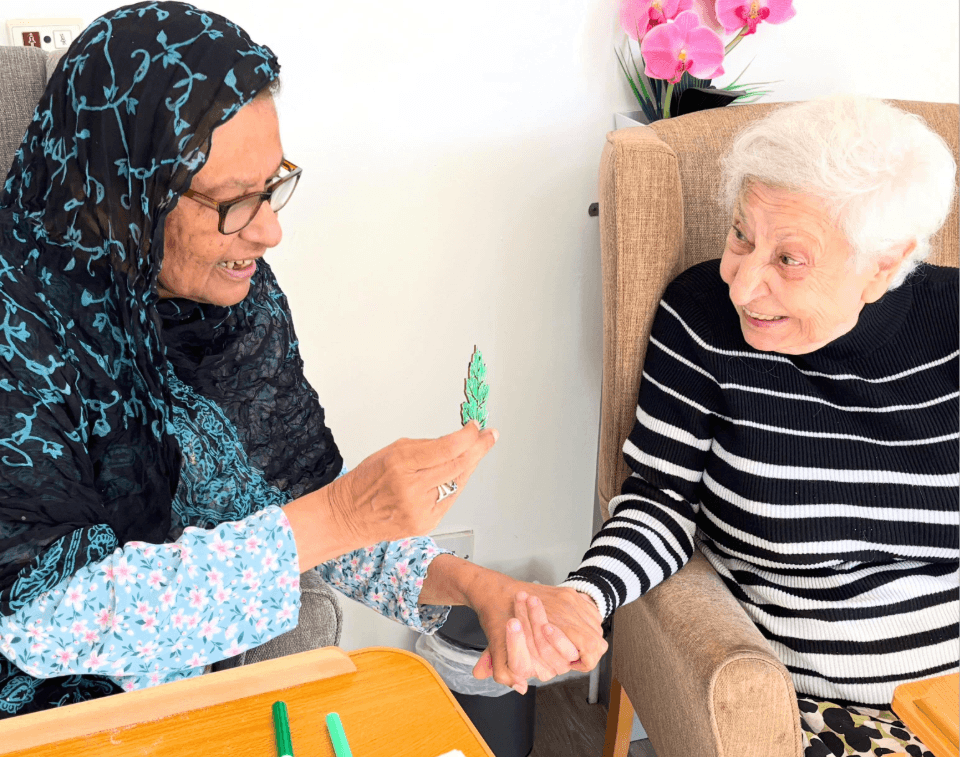
Residential care is about living well day to day. Care assistants help with the things that have become difficult: getting washed and dressed, eating well, moving around safely, taking medication on time. They also do the part that makes a home feel like a home, which is company, routine, and having someone notice that you are not quite yourself today.
If a medical need comes up, the home works with your loved one's GP and visiting district nurses. For many people that is all they need, and it is the right fit. You can read more about residential care at RMD Care.
What a registered nurse adds
A registered nurse has trained for years and is registered with the Nursing and Midwifery Council. In a nursing home, that clinical skill is on shift with the team, not a phone call away. In practice it means:
- Medication administration. Nurses give injections, manage controlled drugs and adjust how medicines are given when someone's condition changes.
- Clinical monitoring. Blood pressure, blood sugar, breathing, hydration, skin condition. Nurses know which small changes matter and when to call the GP.
- Wound care. Pressure sores, surgical wounds and leg ulcers need proper assessment and dressing, often daily.
- Continence and feeding support. Catheter care and feeding tubes are nursing tasks.
- Long-term conditions. Diabetes, Parkinson's, heart failure and COPD all need someone to keep an eye on the whole picture.
- Palliative and end of life care. Pain relief and symptom control are managed in the home, so there is less need for a hospital trip at the worst possible time.
Our nursing care sits alongside healthcare support in our homes, so routine health needs are looked after without families having to organise it all themselves.
The nurse and the care assistant do different jobs
This is the bit people often miss. Nursing care does not replace the care assistant. Both are in the room, doing different things.
The nurse is watching the clinical picture: is this wound healing, is that breathing pattern new, does this medication need a second look. The care assistant is the person who knows that your mum likes her tea weak, hates the radio on in the morning, and goes quiet when she is in pain. In our experience the best outcomes come when those two people talk to each other all day long. A nurse who listens to the carer and a carer who feels safe raising a worry catches problems earlier than any chart does.
How to tell which one is needed
Signs that point towards nursing care
- Regular dressings or wound care
- A catheter, feeding tube or stoma
- Injections that need a nurse, such as insulin
- Complex or frequently changing medication
- Repeated hospital admissions or a health condition that changes quickly
- Pain or symptoms that need close management near the end of life
Signs that residential care is likely enough
- Help needed with washing, dressing, meals and getting about
- Memory loss without significant medical needs
- Health that is stable and well managed with the GP
- Safety and company are the main worries
These are guides, not rules. The decision comes from an assessment. A care needs assessment from your local authority is a good start, and any home worth choosing will carry out its own assessment before offering a place. If you are still weighing up whether it is time, our piece on when families should consider a care home may help.
Cost and funding
Nursing care usually costs more than residential care because the home employs registered nurses. There is one important piece of help on the nursing side.
If your loved one lives in a nursing home and does not qualify for NHS Continuing Healthcare but has been assessed as needing care from a registered nurse, the NHS can pay a contribution called NHS-funded nursing care. From 1 April 2026 the standard rate in England is £267.68 a week, paid by the NHS directly to the home. Most people do not need a separate application, but your local integrated care board can arrange an assessment if you need one.
When you compare fees, ask each home whether the quote already includes that NHS contribution or whether it comes off afterwards. It is a simple question and it avoids a lot of confusion later.
Questions to ask when choosing a home
- Is a registered nurse on shift at night as well as in the day?
- If my loved one's needs increase, can they stay here, or will they have to move?
- How do nurses and care assistants share information through the day?
- How long have the nursing team been here? Consistency matters more than a long list of services.
- How does the home work with the GP and hospital when something changes?
- How is NHS-funded nursing care shown in the fees?
The second question is the one we would put first. Needs change, and a second move is hard on everyone. At Bentley Lodge and Cams Ridge we can talk you through how nursing care works in each home, so you know what to expect before you commit. You can also see all of our care homes.
Families sometimes ask which is better, nursing or residential. Neither. The right one is the one that matches the person today and has room to flex tomorrow. What we would urge is not to wait for a crisis. The hardest moves we see are the ones made quickly from a hospital bed. If you are asking the question, a conversation with us now is easier than one in a hurry later.
Frequently asked questions
Can someone move from residential care to nursing care in the same home?
That depends on the home. Some homes only offer one type of care, and others offer both so that a resident does not have to move when their needs change. It is worth asking before you choose.
Is a nursing home less homely than a residential home?
It should not be. Nursing care is about what is delivered, not how the home feels. Residents in a good nursing home still have their own room, their own routines, activities and visitors. The nurse is there to support the life, not to turn the home into a ward.
Who decides whether my relative needs nursing care?
It is decided through assessment. This can include your local authority's care needs assessment, the home's own pre-admission assessment, and, where relevant, an NHS assessment for funding. The home will explain the outcome and what it means for care.
Does the NHS pay for all nursing care?
No. NHS-funded nursing care is a flat weekly contribution towards the nursing element. NHS Continuing Healthcare is different and can cover the full cost of care for people with a primary health need, but eligibility is strict and assessed separately.
What happens if my loved one's needs change after they move in?
The care plan is reviewed regularly and whenever something changes. If more nursing support is needed, we will talk to you early, explain the options and help with the next step.
Talk to us about the right care
You do not have to work this out alone. Tell us a little about your loved one and we will help you understand which type of care fits, and what happens next. Get in touch with our team and come and meet the family who will care for yours.