NEWS & ARTICLES
What a Good Day Looks Like for a Resident Living With Dementia
July 2, 2026
Written by
Helen Brown
People often ask us what we actually do for residents with dementia, beyond the basics of personal care and medication. It is a fair question, and one that is hard to answer in a brochure. So instead of describing our approach in the abstract, we want to describe what a genuinely good day looks like for someone living with dementia in one of our homes.
This is not every day. Dementia does not work in straight lines, and some days are harder than others for reasons nobody can predict or prevent. But this is what we aim for, and what our team works toward consistently.
Morning: Pace and Familiarity Before Everything Else
For many people living with dementia, mornings are the sharpest part of the day. The fog of confusion that can settle later has not yet arrived, and there is a window where orientation is easier and engagement is more natural.
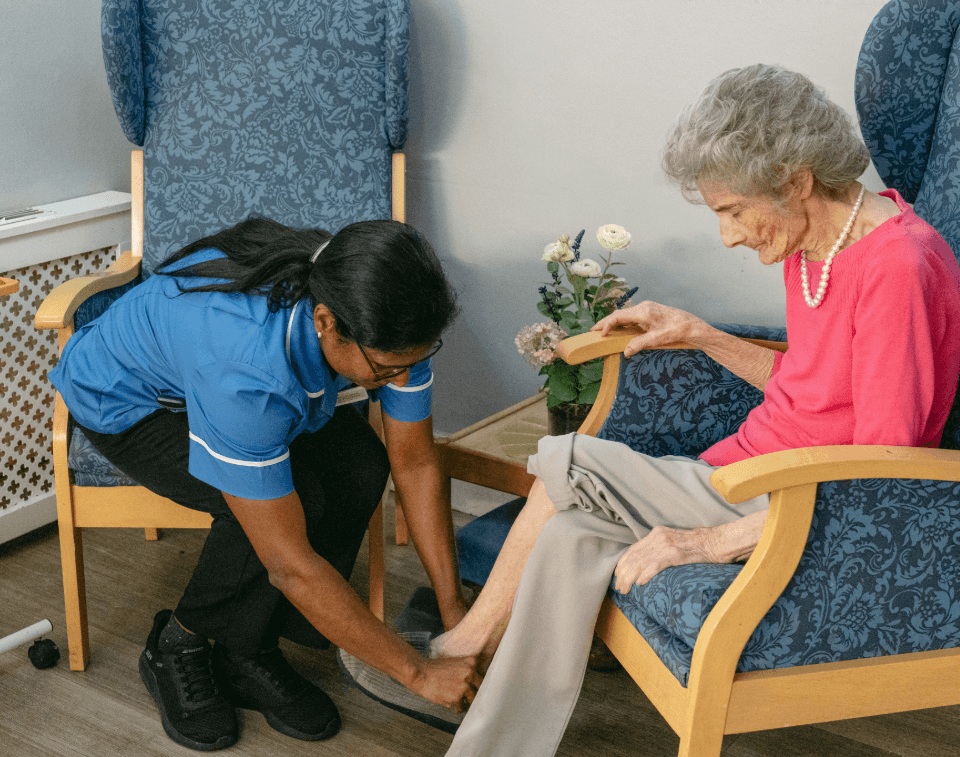
We do not rush mornings. Getting up, washed, dressed and ready for the day can take longer for a resident with dementia than it might for others, and treating that time as something to be hurried through is one of the most common ways care can inadvertently add to distress rather than reduce it.
"We always say to new care staff: your pace is not their pace. If someone needs twenty minutes to feel ready to leave their room, those are twenty minutes well spent. The whole morning goes better when it starts at their speed."
What a calm morning typically includes:
- The same member of staff appearing at the same time where possible, rather than a rotating set of unfamiliar faces
- Familiar prompts and gentle routine, rather than instructions or corrections
- Breakfast in a calm dining environment, ideally with other residents they have started to recognise
- Natural light and, where residents are willing, some time outdoors before activities begin
Mid-Morning: Structured Activity That Meets People Where They Are
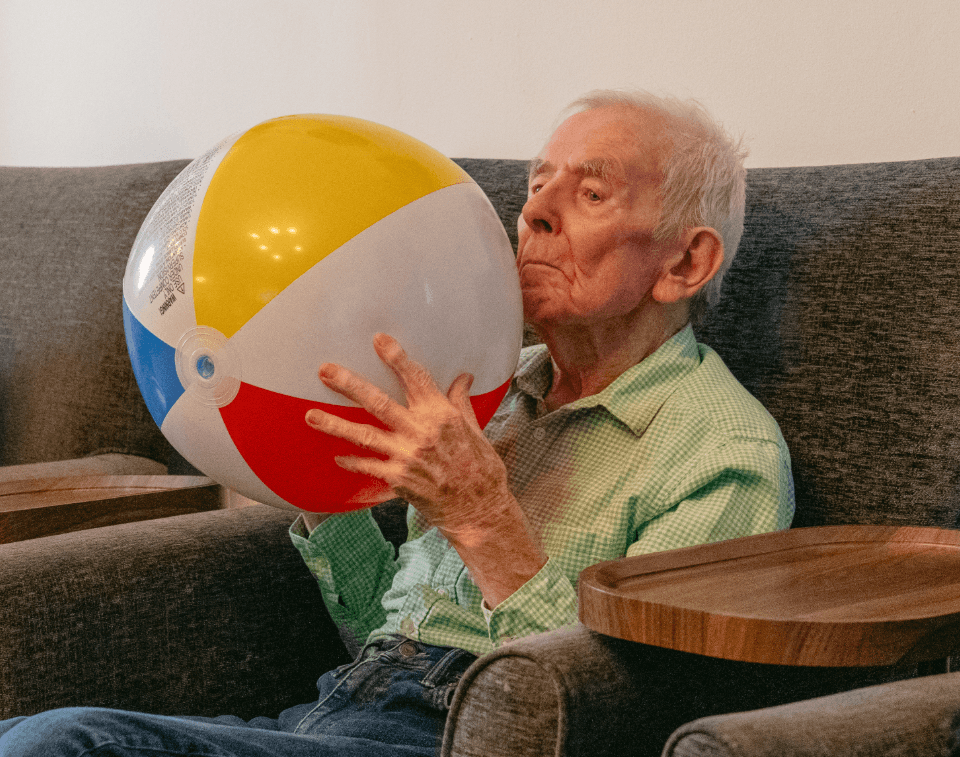
The most important thing about activity for residents with dementia is that it is not designed to stimulate them the way a puzzle stimulates someone without cognitive impairment. The goal is familiarity, gentle engagement, and a sense of purpose.
Activities we use most consistently during mid-morning include:
Reminiscence sessions These work particularly well because long-term memory tends to remain more intact than short-term memory in most forms of dementia. A resident who cannot reliably recall yesterday's lunch may be able to describe their wedding day, their first job, or their childhood neighbourhood in remarkable detail. Sessions built around music, photographs, or objects from an earlier era tap into that intact memory and create moments of genuine connection.
Sensory activities For residents in later stages of dementia, structured cognitive activities can create frustration rather than engagement. Sensory-based activities, handling different textures, engaging with familiar scents, listening to music that has personal significance, keep the person present without placing demands on the cognitive functions that dementia has affected most.
Simple practical tasks Folding, sorting, gardening in raised beds, helping to lay the table. These are not about filling time. They serve the deeply human need to feel useful. Many of our residents spent decades running homes, working in trades, or caring for others. Offering tasks that echo those roles reconnects them to a sense of identity that dementia has not removed, only made harder to access.
Lunchtime: More Than a Meal
Mealtimes are one of the most important parts of the day for residents with dementia, and not just nutritionally.
The social dimension of eating together is one of the most natural and consistent human experiences there is. For residents who struggle with language or who find extended conversation difficult, sharing a meal with familiar faces provides companionship without the pressure to perform cognitively.
"We pay close attention to where residents sit at mealtimes. Who they relax next to, who they respond to. Some of the steadiest friendships in our homes started because two residents happened to sit near each other at lunch and fell into a comfortable routine. Those small things matter more than people realise."
For residents with dementia, we also pay specific attention to:
- Food presentation, which should be clear and uncluttered rather than trying to be decorative in ways that create confusion
- Appropriate cutlery and crockery for the level of ability, introduced without comment or ceremony
- Adequate time, without pressure to finish or move on
- Monitoring intake carefully over time, since appetite and swallowing can change as dementia progresses
Afternoon: Reading the Day
Afternoons are where dementia care requires the most experienced judgement.
Sundowning, the increased confusion, agitation or distress that many people with dementia experience in the late afternoon and early evening, is one of the most challenging aspects of the condition to manage. It does not affect everyone, and it does not affect the same person the same way every day. But it is predictable enough that our team plans for it.
What that looks like in practice:
We do not treat sundowning as a problem to be managed with sedation as a first response. In most cases, it is a communication that something is wrong: too much stimulation, an unmet physical need, or a moment of disorientation that can be addressed with presence, familiarity, and calm.
What Families Can Contribute to a Good Day
Your involvement does not stop at the care home entrance.
The information you share with us shapes every good day your relative has. Before and after a move, the things that help us most are:
- Life history details. What did they do for work? What were they proud of? What music did they love? What were their routines at home?
- Triggers you have noticed. What tends to make a difficult moment worse? What reliably helps?
- Preferences that seem small but matter. How they took their tea. Whether they preferred quiet or company. What they watched on television in the evening.
- Honest updates. If you notice a change after a visit, tell us. You are seeing your relative with fresh eyes that can catch things gradual daily contact sometimes misses.
"The families who stay curious about their relative's day, who ask us specific questions rather than just 'how are they?', who share what they notice, those are the families whose relatives tend to have the most consistent good days. It is genuinely a partnership."
A good day for a resident living with dementia is not dramatic. It does not require a breakthrough or a memorable event. It is a day where they felt safe, where they felt known by the people around them, where something made them smile or reminded them of who they are. That is what we work toward, every day, in every one of our homes.

Helen Brown
Home Manager. Westlands
Leading Westlands since 2017, Helen manages our exceptional team with warmth, professionalism and commitment to creating a safe, caring environment.